Nobody is afraid of dental implants. They are afraid of pain, of loss of control, of the sounds, of being judged for how their teeth got this way. After twenty years as an implant surgeon in London, I can say with confidence: the anatomy of fear is more predictable than the anatomy of the jaw — and just as important to map before you operate. Dental anxiety is one of the most common phobias in the UK; in implant dentistry we meet its most severe form daily, because the patients who need the most complex rehabilitation are so often the ones who stayed away the longest.
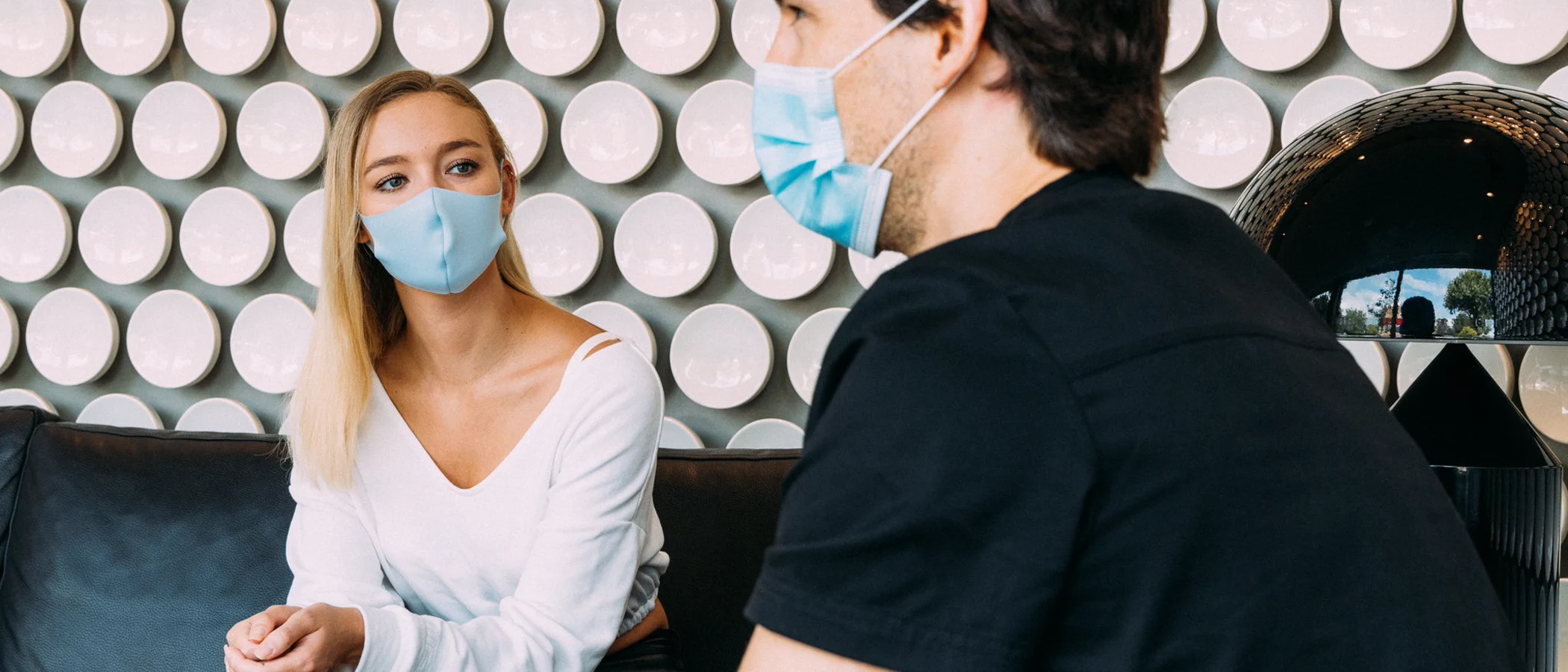
A large share of the patients who come to Maida Smiles have avoided dentists for years, sometimes decades. They arrive apologising — for the state of their mouth, for their nerves, for 'wasting my time'. This is the moment that decides everything, and it is why I insist that the first consultation is a conversation, not a procedure. No chair tilted back, no bright light in the eyes, no instruments in sight — just two chairs, an honest assessment, and a plan explained in plain language. Patients can handle any truth about their mouth; I have delivered difficult news thousands of times and never once had a patient fall apart because I was honest. What they cannot handle is condescension.
Calm is engineered
For the surgery itself, modern conscious sedation has changed what is possible for nervous patients. I trained in intravenous and inhalation sedation at Queen Mary University of London precisely because so many complex implant cases belong to anxious people — the ones who waited longest are often the ones who need full-arch work. Under IV sedation a patient can be deeply relaxed, safe, monitored continuously, and cooperative while hours of precise surgery happen. Most remember almost nothing of the day. For many of them, that single calm experience quietly rewrites a lifetime of dental fear.
But sedation is a tool, not a philosophy. The philosophy is that calm is engineered, like everything else in implant dentistry. It is engineered through preparation the patient can see: the CBCT scan explained on screen, the plan they can hold in their hands, the schedule that says exactly what happens when, the fixed price that will not grow in the dark. Uncertainty is the oxygen of fear. Remove the uncertainty and fear has very little left to breathe.
The outcome that matters
There is a specific moment — usually months after surgery — when someone who spent years hiding their mouth laughs without covering it. That is the outcome I am actually in business for.
Dentistry measures itself in success rates and survival curves, and we are proud of ours. But the metric I privately track is quieter: the patient who books their next check-up without being chased, the one who brings their teenage son 'so he never ends up like I did', the one who once needed sedation for a scale and polish and now chats through treatment. My favourite patients are the ones who once feared us most. The implants, in the end, are just how we get there.