
If a missing tooth is making eating difficult, or you are wondering whether NHS dental implants in London are possible, the honest answer is yes, but only in limited circumstances. In consultation, I see how quickly a clinical question becomes a question about money and time. NHS-funded implants are uncommon, tightly prioritised and usually hospital-based. They are not a routine replacement for every missing tooth.
Eligibility depends on serious clinical need, whether conventional options have failed or are unsuitable, the condition of your mouth, and the local NHS trust’s criteria. Good oral hygiene and stable gums matter because treatment must be clinically appropriate; approval is not automatic. London has no dependable city-wide waiting time. Each trust and pathway sets its own process, and capacity can change, so check any estimate with the service handling your referral.
If NHS funding is not available, I explain private treatment separately, including its stages, alternatives, costs and uncertainties. That conversation should be transparent, with time for you to decide; it should never feel like pressure to pay. Ask your NHS dentist what clinical reason would support a referral, which hospital or trust would assess it, and what information is needed. I can help interpret the options, but I cannot promise NHS approval or a particular result.
The clinical threshold for a referral
As an implant dentist, I am often asked whether the NHS will pay for a dental implant. NHS-funded implants are rare and are provided through hospital-based services. They are not usually offered simply because an implant would be preferable to a denture or bridge. The decision turns on clinical need, the available alternatives and the criteria used by the hospital service assessing you.
At Guy’s and St Thomas’, the high-priority groups include people who have lost teeth following head-and-neck cancer surgery; people with inherited conditions that have led to missing teeth; and people with severe traumatic tooth loss. The criteria also include complete tooth loss in one or both jaws where repeated treatment with non-implant dentures has failed. These examples describe the kinds of circumstances a hospital team may prioritise, rather than an automatic entitlement to treatment.
Guy’s and St Thomas’ and King’s College Hospital also refer to severe intolerance of dentures within their shared criteria. This matters where a person cannot manage a conventional removable option, but intolerance still needs to be assessed carefully. A referral does not mean an implant will be approved. The hospital team will review your dental and medical history, examine your mouth and consider whether an implant-supported solution is justified in your particular circumstances.
In most cases, a conventional bridge or denture is considered first. That is because these options may restore function without surgery, and may be more appropriate for the condition of your mouth or the way your teeth have been lost. I would want to understand how you have managed previous treatment, what has failed, and what you need day to day before discussing whether a referral is sensible.
The published south-east London criteria are more specific still. Tooth loss attributed to periodontitis, endodontic failure or bridge failure is not considered an indication under those criteria. Replacing posterior teeth is described as low priority and is not usually accepted. For cases that are considered, the assessment requires good oral hygiene, no active periodontal disease and no smoking history, alongside a detailed clinical assessment. These are trust-specific criteria, so they should not be presented as a universal rule for every NHS service in England.
If an NHS service declines funding, that does not mean your difficulty is unimportant or that your concerns about eating, speaking or denture comfort have been dismissed. It means the case has not met that service’s threshold or pathway at that time. I can still help you understand the reason, consider whether a bridge, denture or other approach could help, and explain what questions to take back to your dentist or hospital team. A clear decision is better than being left unsure about your options.
From your dentist to a hospital pathway
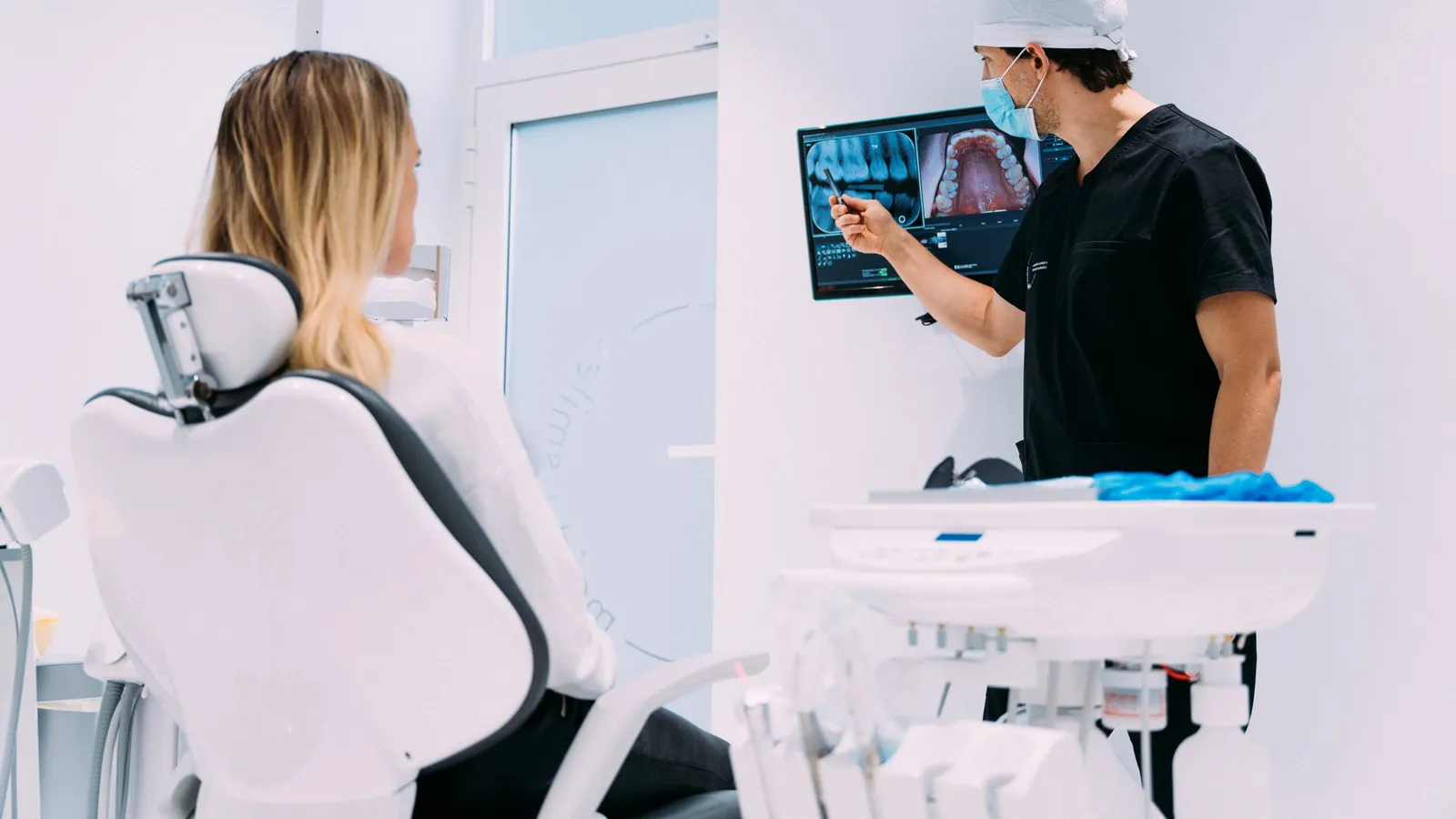
When a patient asks me whether an NHS dental implant is possible, I start with the pathway rather than a promise. The usual first step is an assessment with a general dental practitioner. We examine the missing tooth, your mouth and health, and discuss alternatives such as a denture or bridge. If the situation appears to fit NHS criteria, your dentist can refer you to the relevant hospital service.
A referral is not a booking for implant treatment. Each trust sets its own clinical criteria and catchment rules, so services may only accept patients from particular areas or referral routes. The hospital team can triage the information, request details, redirect you, decline the referral, or accept it for specialist assessment. The decision is based on documented clinical need and the local pathway, not simply on wanting an implant.
I am cautious with general London waiting-time figures. There is no reliable single London-wide wait for NHS implants, and a specialty wait should not be treated as an implant wait. Separate the referral or triage wait from treatment time. Those stages may involve different teams, and timing can change if records, scans or another opinion are needed.
Guy’s Hospital explains that treatment itself can take 6 to 12 months. That is the treatment period, not necessarily the referral wait. It may involve pre-operative assessment, possible bone grafting, implant placement and restorative work, with each stage potentially requiring several visits. Your sequence may be shorter or longer depending on healing, suitability, the number of teeth involved and the service’s arrangements. The hospital should explain the plan for you.
Before leaving your general dentist, ask whether the referral has been sent and when, which service received it, whether it has been accepted, redirected or triaged, and whether anything is missing. Ask what interim alternative is sensible, when to chase an update and whom to contact. Keep copies of referral letters. At assessment, ask the implant dentist or implant surgeon to distinguish the clinical stages from the administrative wait, so you can plan realistically.
How to compare private care fairly
Private treatment is not automatically the better answer when NHS funding is unlikely or the wait feels difficult. I begin with the same clinical question: is an implant appropriate, or would a well-designed denture, conventional bridge or implant-supported denture serve you better? The answer depends on the teeth and bone present, oral health, general health, maintenance and what matters to you.
Current government guidance says dental professionals should make clear which care is NHS and which is private. Before treatment starts, you should receive a written plan describing the proposed treatment, the costs and its NHS or private status, with an updated plan if those details change. You can ask when each option could begin, and you should have time to consider the answer without being pressed into a decision.
I would expect an implant assessment to include a diagnosis, a periodontal review, appropriate imaging and a discussion of alternatives. The written plan should say whether the estimate includes scans, extractions, grafting or other preparation, a temporary tooth if required, implant placement, the abutment and final restoration, review appointments and ongoing maintenance. An attractive headline fee is less useful when important stages sit outside it.
A useful plan does more than name a total; it shows the route to that total.
Ask for a realistic sequence as well as a price. Who is responsible for surgery, restoration and aftercare? What healing intervals are anticipated? What could alter the plan, and how would extra work be costed? If payment is staged or financed, compare the total amount payable rather than the monthly figure alone. A clear timeline can matter as much as speed, particularly when temporary teeth or work commitments have to be arranged.
Take the plan away and compare like with like. If two proposals differ, ask whether that reflects diagnosis, materials, clinical roles, maintenance or simply omitted items. Seek another opinion if the recommendation or urgency is unclear. I would rather a patient understand why an implant is or is not suitable than feel funnelled towards an expensive procedure.
The practical route is to establish whether your clinical need fits a local NHS hospital pathway, ask for a current estimate of each waiting stage, and then compare every realistic option in writing. If you remain unsure, an assessment with me at Maida Smiles can be an itemised discussion of options and timing, not a promise that one route will suit you. Good implant care begins with an honest diagnosis and a decision you feel comfortable making.