
Patients sometimes arrive with two quotations that look alike at first glance, yet the totals may cover very different journeys. When people ask me about implant cost in London, I understand that they are rarely asking only about the implant fixture. They want to know what they will actually need, what the finished tooth should involve, and whether an unexpected item will appear halfway through treatment.
That concern is reasonable, but no implant dentist can honestly attach one universal figure to every mouth, or price every possible contingency before an assessment. A quotation is a clinical plan expressed in pounds: it should describe the investigations, procedures, components, aftercare and intended endpoint being proposed. The useful comparison is therefore not which number is lower, but whether both documents describe the same treatment and destination. I will set out a practical way to read each line, identify omissions and ask clearer questions before deciding.

What an implant quote should include
Patients often ask me, ‘What should a dental implant quote include?’ I begin with diagnosis rather than hardware. It should state the medical and dental history review, clinical examination and relevant radiographs covered by the assessment. A CBCT scan for dental implants is not automatically necessary for every person; it should be requested only when clinically indicated. If one is advised, I would expect the plan to explain its purpose, whether the fee is included, and who will report or use the scan.
The restorative chain also needs naming in ordinary language. The implant fixture is the component placed in the jaw; the abutment connects it to the visible final crown. I make those three elements explicit because an advertised implant price does not automatically include all three. The quote should identify any materials or options that affect care or cost, without implying that one choice suits everyone. Clarity here prevents a low headline figure from disguising an incomplete comparison.
Before placement, some people may require an extraction, management of the socket, or bone or soft-tissue grafting. None should appear as a routine add-on: each should be recommended only when clinically required and explained with its separate cost or stated inclusion. I also want the temporary tooth plan made visible, including whether a temporary option is feasible, when it would be provided, and which adjustments are covered. The absence of a temporary plan can matter as much as its price.
A useful quote maps the visits as well as the components. It should say which surgical and restorative appointments are included, how many postoperative reviews are anticipated, and when the finished restoration will be checked. I distinguish immediate aftercare from continuing care: short-term wound or restoration checks may form part of treatment, whereas routine hygiene, monitoring and long-term maintenance may remain separate. Patients should know where the quoted episode ends and the responsibility for preserving the result begins.
I treat finance as the final layer, after clinical scope is clear. GDC Principle 2 requires a written treatment plan before treatment, with a realistic indication of cost, and a written update if the plan changes. For patients considering dental implant finance in London, the terms should show any deposit, staged-payment dates, APR or interest, fees and the total amount repayable, rather than a monthly figure alone. A payment schedule cannot correct an unclear treatment plan; it should make a properly defined plan easier to understand and budget for.
Why two treatment plans differ
When patients ask me why dental implant quotes vary, I begin with a simple distinction: the quotes may not describe the same treatment. Starting anatomy, the condition of the tooth and gum, bone volume, diagnostics, number of stages, restorative design, laboratory work, temporary replacement and review schedule can all differ. An implant quote is therefore not merely a price for the same screw. It is a proposed route from the mouth I examine to the final tooth we have agreed to make, before any comparison becomes useful or fair.
Hypothetical Plan A: a healed single-tooth gap, healthy tissues and adequate bone. A possible written scope could include assessment and appropriate imaging, implant fixture placement, healing, the abutment, the crown and a defined set of reviews. The crown design, chosen components and laboratory responsibilities should also be visible, not silently assumed. I would also expect the assumptions behind that scope, and any reasonable alternatives, to be recorded. If those assumptions hold, the route may be relatively direct, but its directness depends on the recorded starting conditions.
Hypothetical Plan B: a failing tooth that may need extraction, a temporary replacement, and grafting before or at implant placement. Staged healing and additional reviews may extend both the sequence and the fee. This is not inherently a better or worse plan than Plan A; it answers a different starting condition. Searches about extraction, grafting and implant costs in London often flatten that difference into an add-on, when the clinical timing and purpose matter. A careful plan explains which need belongs to which stage.
The ADI’s planning guidance reflects the sequence I use as an implant dentist in London: relevant history, examination and diagnostic imaging inform the written plan and estimate, alongside individual hard- and soft-tissue needs. Experience, restorative design, component choices and laboratory input can affect fees, but price alone does not prove quality. A fair comparison becomes possible only when the intended final tooth, preparatory work, temporary phase, treatment stages and follow-up arrangements align. That alignment matters more to me than matching headline totals.
A contingency should not be vague. In a written dental implant treatment plan, I want it to state which finding would trigger the change, whether that decision can be made before treatment, how it is likely to alter the sequence, and that any fee update will be provided in writing. Plans A and B are both illustrations, not individual quotes or recommendations. Clarity sits upstream of comparison: first establish what is included, then compare the figures attached to genuinely comparable care.
Clarity sits upstream of comparison: first establish what is included, then compare the figures attached to genuinely comparable care.
How to compare implant costs in London
When I compare implant costs in London, I make the written plans describe the same journey. I place assessment and imaging together, then extraction or grafting, implant fixture, abutment, crown and any temporary tooth. I compare appointments, reviews, maintenance, contingencies and timing. A lower figure may stop earlier in that sequence. The aim is to understand whether both plans share the same clinical endpoint.
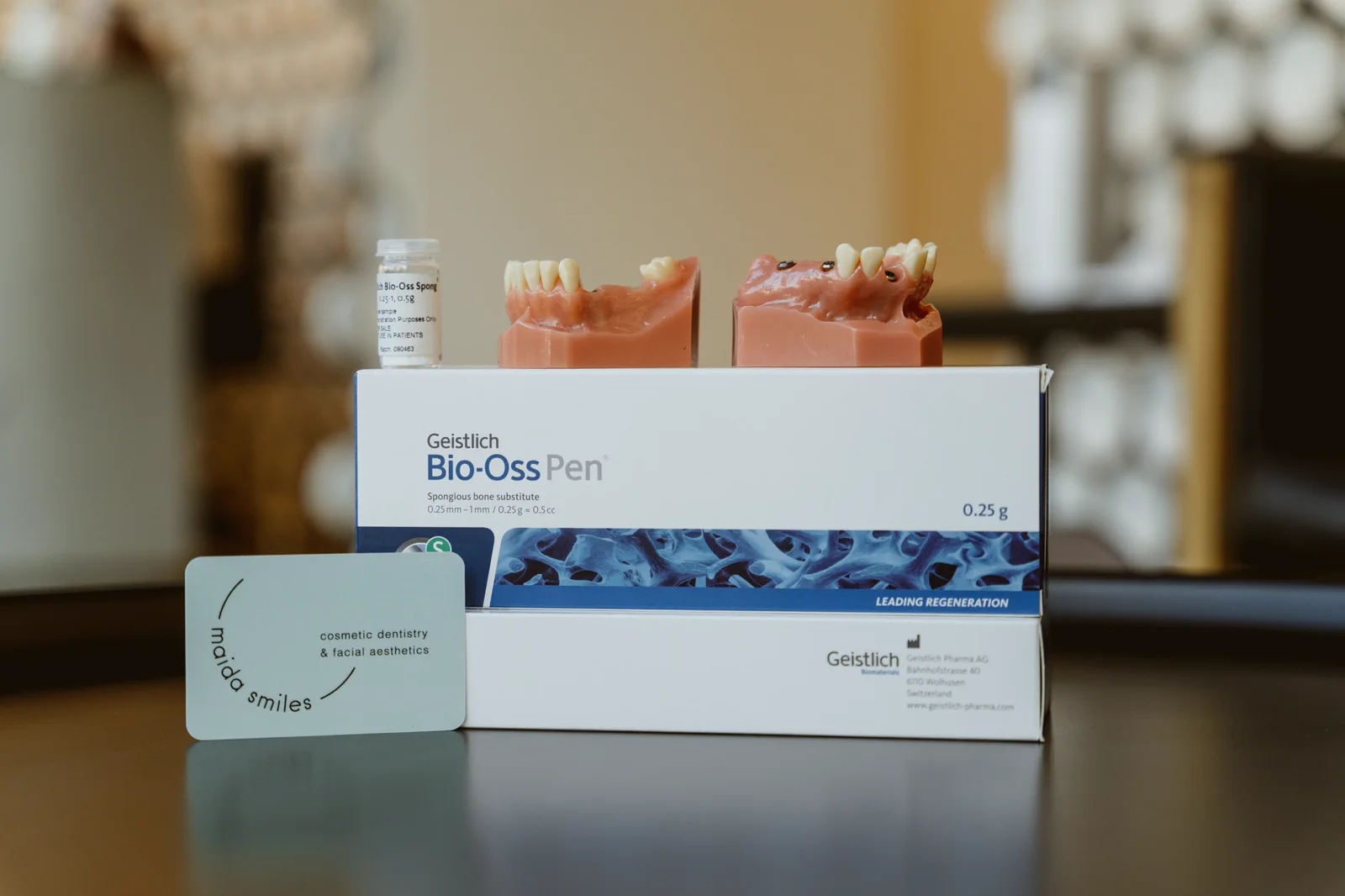
Maida Smiles offers a useful time-of-writing example of transparency: it currently publishes £115 for an implant consultation and £2,500 for a single-implant package described as including the implant, abutment, crown, appointments, radiographs, impressions and aftercare. The page labels this as 2025 pricing. Published figures can change, the package is not a universal price for every patient, and I would not infer that a CBCT is included simply because radiographs are listed.
I ask an implant dentist in London what is excluded, provisional or assessment-dependent, then request written clarification. If the plan changes, its scope and cost should also be recorded. When considering dental implant finance in London, I compare the cash total, deposit, staged payments, term, APR and total repayable, rather than the monthly figure alone. A clear written dental implant treatment plan makes those differences visible before treatment begins.
Finally, I would ask which alternatives remain reasonable: retaining the gap, a bridge or a removable option may be clinically suitable in some mouths. An implant is one route, not an obligation. If two plans still tell different stories after clarification, a second opinion is entirely legitimate. It should help you understand the choices, not pressure you into one.
Neither the lowest nor the highest total is automatically the right one. The valuable document explains your clinical starting point, the intended endpoint, what is included, which contingencies may alter the plan and what alternatives remain available. A consultation with me is an individual assessment leading to a personalised written treatment plan that you can compare with confidence, not a sales estimate. I see that transparency as part of informed consent: a practical way to respect both the complexity of treatment and the person considering it.