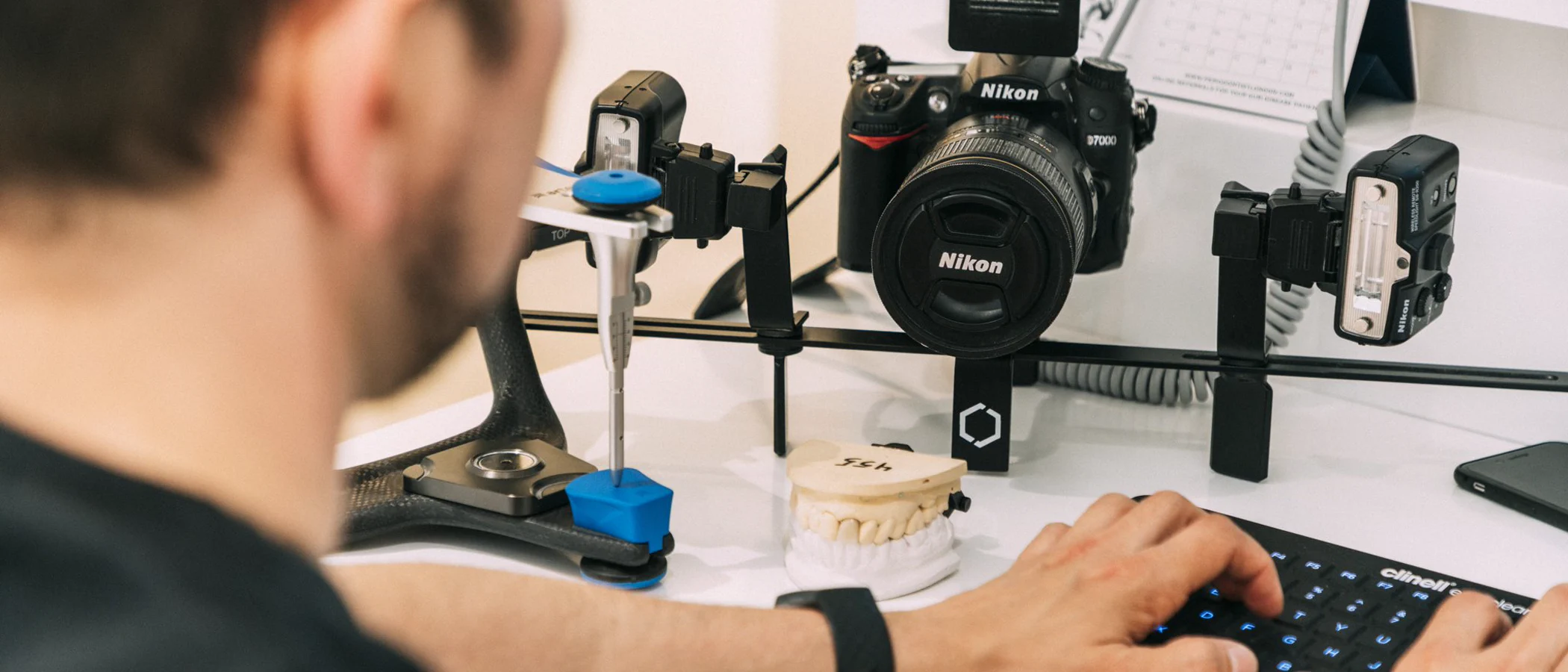
When we briefed the architects for Maida Smiles, our clinic in Little Venice, I did not ask for a beautiful dental practice. I asked for a space that would tell the truth about how we work — before reception says hello, before a CBCT scan is taken, before I introduce myself as the implant surgeon. People read rooms faster than they read words, and they read them with the oldest part of the brain, the part that decides safe or unsafe long before language gets involved. A dental clinic that looks like a waiting room for bad news produces patients who behave as if they are waiting for bad news.
Pedra Silva Architects answered with a wall of five hundred handmade ceramic discs, arranged in a honeycomb across the length of the practice. Most visitors see texture and calm. I see the material we work with every day — ceramic, the substance of a crown, of a veneer, of the prosthetic teeth we fix onto dental implants — repeated until it becomes architecture. The wall went on to win a Surface Design Award for a public building interior, which pleased me for an unusual reason: the jury was evaluating honesty, not decoration. The building says what we do.
The room is part of the procedure
Dental anxiety is not a character flaw; it is physiology. Fear raises heart rate and blood pressure, tightens muscles, amplifies pain perception, and makes long procedures feel far longer than they are. For implant dentistry — where a full-arch case can mean hours in the chair — anything that lowers that baseline is, strictly speaking, clinically useful. Lighting that does not glare into a reclined patient's eyes. Acoustics that do not carry the sound of instruments into the waiting area. A reception that feels closer to a boutique hotel in West London than a triage desk. None of this is luxury for its own sake; it is pre-medication without a syringe.
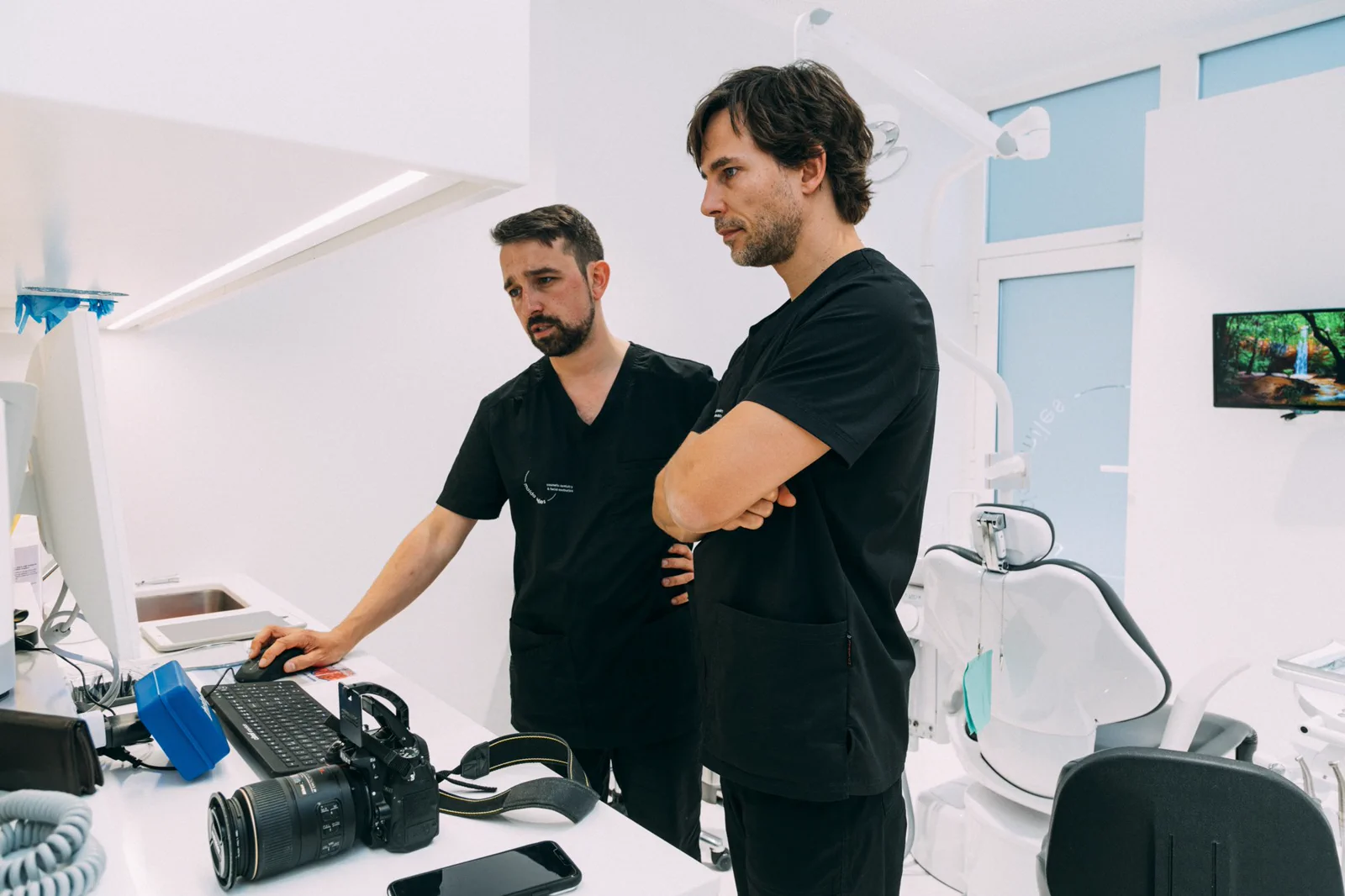
There is published evidence behind this instinct — environmental psychology has shown for decades that clinical environments change patient-reported anxiety and even pain scores — but the strongest evidence walks through our door every week: the patient who says, unprompted, 'this doesn't feel like a dental clinic', and then sits in the chair with shoulders that are not up around their ears. That relaxed patient bleeds less, tolerates longer sessions, recovers better, and remembers the day more kindly. The design did part of my job before I picked up an instrument.
The team reads the room too
There is a second audience for design: the people who work in it. Nurses, hygienists, treatment coordinators, associate dentists — everyone holds themselves to the standard of the room they work in. A surgeon who walks into a precise, considered space begins the day inside precision; a team that works surrounded by care tends to reproduce it in the details patients never see, like how instruments are laid out or how a handover between colleagues happens. The inverse is also true, and every clinician who has worked in tired premises knows it.
A patient decides whether to trust you in the first ninety seconds. The room speaks first — make sure it tells the truth.
When we built Paddington Smiles in 2025 — our second clinic, a few minutes from Paddington station — we applied the same principle rather than copying the same interior. Different site, different light, same honesty. And when we created Smila, our clear-aligner brand, the design question simply changed medium: how does a digital product communicate clinical seriousness the way a ceramic wall does? If you ever visit either clinic, look at the details the way you would look at a lab report. They were designed to be read.